05 December 2010

YTT - Week 5 Sunday

Backbends and more backbends... Wow.

I was so stiff and sore from yesterday's standing twists practice I didn't think there was any way I would make it through today's... I had to take quite a few breaks because my legs were trembling. I think this has been my hardest weekend since inversion weekend.

We went through Salambhasana (Locust), Dhanurasana (Bow), Urdhva Mukha Svanasana (Upward Facing Dog), Salambhasana with variations, Ustrasana (Camel) at the wall, and Salamba Setu Bandha (Supported Bridge).  That's a lot of backbends!  (You'd likely never do that many in a regular class, but this is teacher training and we are hard core. LOL) Ustrasana at the wall is fantastic for learning the legs work for the pose, but it was so hard because I felt as if I were going to fall backwards. The wall was just a little too close for comfort!

More fascinating information this weekend too about my back injury: I need to be doing backbends to help heal my posterior slipped disc.  I have avoided backbends for years because I thought they would do more damage than good. Little did I realize that I was doing precisely the wrong thing for my particular injury.  I have long had a love affair with forward folds, especially Utanasana (Standing Forward Bend), Prasarita Padottasana (Wide-Legged Standing Forward Fold), and  Paschimottanasana (Seated Forward Bend). As it turns out, forward folds are likely to exacerbate a posteriorly slipped disc.

So let me explain the disc. Check out this picture from Wikipedia contributor Edave. (This is where my injury is, but this is NOT my spine. My herniation is not this large, but it works nicely for my explanation.) Look at the third disc down. It's herniated out the back of the disc (i.e., posterior). If it were out the front of the disc, the herniation would be anterior.

So, as it turns out, for those of us with posterior slipped discs (herniated is technically the correct medical term), backbends help to encourage the protruding disc material to reenter the disc - and forward folds have the potential to squish more fluid out of the disc. It's the opposite for someone with an anterior slipped disc: forward folds help the fluid back in, backbends would push more out.  That's not to say that someone with a posteriorly slipped disc can't do a forward fold - BUT, it should be done slowly, with caution, body awareness and ideally, guidance from a teacher.

I no longer do the seated forward folds the way I used to... I would get into a position and just hang out there for minutes, working on lengthening my hamstrings. Never realizing I was at the very least, irritating my back injury, and at worst, making it worse. I don't hold seated forward folds for a long period of time now, though I will hold the standing folds for a while because they feel amazing on my neck (which is a whole different story of injury...).  I am very careful to ensure I have more extension in my spine than "bend" when I do them, because I want to increase the space between my vertebrae in an even manner, and stretch the intercostal muscles (tiny muscles between your ribs). Oh, and another thing I avoid now, which I did for years and years...  If you are in a standing forward fold and the teacher instructs you to "roll up, one vertebra at a time)... ick.  This is not a good thing to do for anyone with a posteriorly slipped disc. It hurts. For me, it's much better to press down into my feet as if I am pushing the floor away and come up with a flat back. It might sound silly, but just give it a try.

YTT Week 5 - Saturday

Standing Twists... What a day!

The biggies in today's practice were: Parivritta Trikonasana (Revolved Triangle), Parivritta Ardha Chandrasana (Revolved Half-Moon), and Parivritta Parsvakonasana (Revolved Extended Side Angle).  I was surprised that the revolved half moon seemed easier than the unrevolved half moon...

After practice and lunch, we did some hands-on adjustments and then practice teaching of several poses and switched partners each time. That was fun because it got us working a bit out of our comfort zone. I feel so clunky right now when trying to instruct on the spot like this.  Definitely need to work on my "yoga voice."

One of the most amazing things about this experience for me is how healthy my back feels. I've had years of chronic back pain and earlier this year discovered thanks to an MRI that I have a posterior "slipped" disc between L4 and L5. The practice we are doing in this teacher training is generally an advanced level practice, and yet, for the most part I am able to keep up (with modifications) AND feel good while doing so. It's just a reminder to me that this is where I belong... Not in a chair at a computer (which is really hard to accept since that's been my life for so many years).  But on the mat. That's my future, and it's the best thing I can do for my body.

Did you know that the blood supply to the intervertebral discs stops around age 25? Check out this WebMD quote: "By early adulthood, the blood supply to the disk has stopped, the soft inner material has begun to harden, and the disk is less elastic."  I was rather surprised to learn this - I mean really, wouldn't you think that if a part of your body has a blood supply, it would just always have it?  Anyways, this simple fact explains a lot about why disc injuries can take such a long time to heal. This is the great thing about spinal twist poses in yoga. They have what B.KS. Iyengar calls a "squeeze and soak" effect that helps to squeeze out old fluids and then allow fresh fluid to flow in upon release of the twist. It doesn't have to be the fancy twists either, the simple relaxing ones have the same effect. My favorite is a nice reclined twist. Here's an article on this pose at Yoga Journal.

I probably shouldn't be surprised, but I am a little that my back is staying so healthy these days. In March, I was up to having a major "back outage" every 3 months for the previous year+ (which had been a gradual increase over a period of 5 years with the disc problem).  Now, I'm on my ninth month with nothing more than a little soreness or general feeling of misalignment. It's amazing and wonderful, and I'm incredibly lucky to be recovering from this recurring injury with no medical treatment (injections, surgery, etc.).

20 November 2010

YTT Week 5 - Friday

Friday night was a philosophy discussion night.  We started by opening up in Salamba Supta Badha Konasana, which my hips and back liked but my thighs and hamstrings were not completely happy about afterwards. Next time: blocks under my knees.

We reviewed the latter half of Patanjali's Sutras, Pada I. This one really stuck out to me:

1.33 In relationships, the mind becomes purified by cultivating feelings of friendliness towards those who are happy, compassion for those who are suffering, goodwill towards those who are virtuous, and indifference or neutrality towards those we perceive as wicked or evil. 
We can reduce our own suffering if we will keep these four "keys" in our pocket when dealing with people in our lives. And by reducing our suffering, we reduce the overall amount of suffering in the world, which will benefit not only ourselves, but all of those around us.

Friendliness, Compassion, Goodwill, and Indifference

The indifference one is the one I need to work on the most. It's challenging not to want to fire back when one is confronted with another person's wickedness (ok that word is a little funny to me but I get the intent of the meaning). It all comes back to: Let it go.

Just breathe and let it go. As Jackie would say, this is my work.

After class I stayed over with a classmate who has 1. the most comfortable guest bed ever (with the softest sheets ever) and 2. the cutest Aussie Shephered puppy ever. Oh, and she made a fabulous breakfast that keep me not hungry all the way through practice on Saturday, but also not feeling overstuffed and uncomfortable. Thanks Lori for your hospitality!

YTT Week 4

So, I hate to admit this, but here it is actually YTT Week 5 and I never wrote about Week 4.  It was a magical weekend and words really just can't touch it.  Pranayama Friday night, Surya Nasmakara Saturday and Sunday.

All I can say is that I am so glad I am in this class with these women right now. It's an amazing experience and I wouldn't change a thing even if I could.

08 November 2010

YTT Week 3 - Sunday

Sunday, I was back for more. Really, as stubborn as I am, I'm not about to quit, even if I have days when that seems like an option. It's not.

I was surprised to wake up Sunday morning and not have major DOMS from Saturday's 2.5 hour practice. I felt very tired, but the Tiger Balm on my shoulder and the arnica montana helped to prevent major discomfort, for which I was thankful.

We started our Sunday with a quiz, and almost by sheer luck I got a perfect score.  The last couple of questions were worded a bit oddly and everyone was questioning what they meant. Our instructor was not able to explain it further, and simply repeated "think about the foundation." Somehow, that clicked for me and I figured out it was asking the position of the feet (the feet - or whatever parts are touching the ground - are the foundation of a pose).

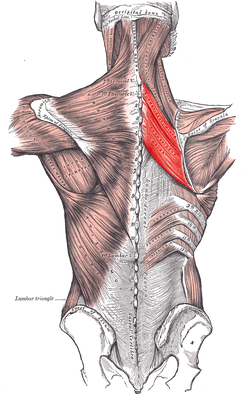
After the quiz our practice began, and 5 minutes in my body decided that was a good time to demonstrate its soreness. Wow. I literally thought I would not be able to make it more than a few more minutes into the asana practice at that point. Every muscle in my body hurt. Especially my rhomboids. Another 5 minutes in and it didn't get easier, but the worst of the agony seemed to have passed. By the time we got to Surya Namascar A, my body was complaining but I knew I would make it through the practice.  Not without a few other instances of near tears simply because my body was protesting throughout the entire 2 hours. Not in a "ow, that hurts" way but in an "OMG my muscles are so tired" way.

Every weekend we have training brings such a new experience. Inversion weekend was incredibly challenging for me, physically and mentally. Having to fight the natural frustration that rises from not being able to get into a pose (heh, even the prep position of the pose) is a real struggle in my head. This is something that I hope to conquer during my training; it is something that I have struggled with in a way all my life. The feeling of not being good enough and the frustration that brings. And you know what? No one is telling me I am not good enough except me. IT'S ALL IN MY HEAD. Not a single person in this training has ever made me feel like I do not belong there - except for me. I wish I could find the words to explain how incredibly supportive this group of women is... it's something I have never experienced before and it's quite magical.

We are all our own worst critics. Why create suffering for ourselves when the world is full of suffering already? It's a hard lesson to learn I suppose, since it keeps recurring for me I clearly have not managed to learn it completely. One day at a time though. Habits take a while to build up, it's the same with breaking them as well.

No matter how difficult this journey becomes, I will not stop. I have never before felt more certainty about where my life should go than I have since the beginning of this training. This is what I was meant to do, what I *am* meant to do, this is my place. And I am cherishing every step of the journey, because though the destination may be great, the journey is something to be savored. I will never be this person again, with these exact people on the journey with me. It's not something that can be recreated, and it's all the more precious for it's uniqueness.

25 October 2010

YTT Week 3 - Saturday

Week 3 was inversion weekend. I went into the weekend knowing that I currently don't have the strength to get into most of the the big inversions (Salamba Sirsasana, Adho Mukha Vrksasana, Pincha Mayurasana, Salamba Sarvangasana). And that's ok. They haven't been part of my practice - ever, in most cases - so I wasn't about to expect myself to get up the first weekend we work on them.

Saturday was a major shoulder opener warmup to prepare for headstand, handstand, forearm balance). I am constantly amazed at how physically challenging yoga can be.  I used to practice yoga simply to stretch my body and still my mind.  In the past year, trying to combat my chronic back problems, I have started to look at yoga more as therapy: a way to get stronger, gain awareness of my body, and learn to prevent further back injuries. Yoga can be whatever you want it to be.  Simple stretching?  Sure.  Strength building? Yep. Meditative practice?  That too.  Connection to the universal Divine? Yes, even that if that is what you seek.

So, back to Saturday.  As usual, it was pretty much the hardest physical practice I've ever done. Every day in this training is more challenging, and all I can do is try to keep up. I did my best, which was ok. Not as good as I would have liked, but I can only push myself so hard to keep up with everyone else before I run the risk of injury. And it's just not worth that risk.  After the first weekend of YTT, I decided I would make an effort to just not notice how far "behind" I am everyone else physically, because my journey is my own, and it really doesn't matter how my Vira 2 compares to someone else's Vira 2, or that I have to go to my knees in my Chaturanga Dandasana every.single.time.

But telling yourself you won't notice that everyone else is on the third round of SNA without a rest or modification while you yourself are taking breaks every time we get to Adho Muhka Svanasana and actually doing it...well, clearly I didn't succeed in not noticing since I'm writing about it. Knowing my abilities and limits thereof does not mean it wasn't a challenge to watch the rest of the class get up into all of the prep and full poses, while I could barely hold the prep poses. The thing is, when you have one pose you can't do in a class, it's not too big of a deal. But when there are two, three, even four poses for which you aren't ready, it feels like a sign that you don't belong. It's like repeatedly ripping off a bandaid; the problem just keeps getting shoved in your face over and over again. And it hurts. That was me on Saturday. I felt like I shouldn't be there. I kept having to fight back tears of frustration at not being able to do anything. As we moved into our cooldown I still struggled with the tears and for the first time during this challenge seriously considering getting up and leaving class (for a while). I don't really care that I cry in class (every single class so far, aside from the anatomy weekend, of course). I hate being disruptive. It's one thing to cry a few tears that wipe easily away, but on Saturday I was into the wracking sobs type of crying before I managed to control it.

It was a tough day, physically and emotionally.

10 October 2010

Gratitude

Our third weekend of yoga teacher training was our anatomy weekend.  Being the geek that I am, I enjoyed the information and especially the graphics.  A lot of it was review for me, but the best part about anatomy taught by a yoga instructor is that she relates the information to yoga. This is the action of this muscle in this pose, etc.  Check out the cover of this book, which our anatomy instructor highly recommended for further understand of the way muscles work while doing yoga:


It's simply amazing to take basic practical knowledge and then physical put it into practice. External and internal rotation of the hips are my current obsession (which is probably not surprising when you consider that overdoing the external rotation of the hips puts stress on the low back, my biggest "problem" area).  Even if I never move into yoga teaching as a career, this training has been worth the time and effort simply for the incredible amount of knowledge it's given me on working with my own body. Granted, that information is only any good if I put it into practice - I have been, but I need to remain diligent and banish complacency!

So today I learned that I hyperextend my elbows. This is SO exciting to learn!  It may sound ridiculous to be excited about such a thing, but the knowledge will help me to practice yoga more safely and allow me to strengthen my upper body better because I know how to work with it instead of just dropping into a position without awareness. I've long struggled with poses that involve upper body strength because my upper body isn't very strong - and it turns out that part of the trouble is because rather than fully working the muscles, I tend to "lock out" my elbows and make the joint do some of the muscular work.  This is BAD and can lead to joint injury! As well as weak shoulders and arms. My "prescription" so to speak is to always have a microbend in my arms in poses such as Adho Muhka Svanasana and to concentrate on rotating my arms so that the "eyes" of the elbows face one another.  I have SO much to work on putting into my practice between this, learning to lift in my palms (to protect the wrists), spiral my inner thighs back (to increase space in my low back), it's like a whole new yoga practice to learn!
 
After class today I met my husband and son at a friend's for a BBQ dinner.  I monopolized the conversation for some time about yoga. LOL  I was just on a roll! I am so excited about this change in my life... I really am not sure what it will come to at the end of 6 months of training, but I do know that in just these few weeks what I have learned has already made a significant difference in my yoga practice and my life. I am so grateful for this place and time in my life, and to have this opportunity to improve my health and awareness of my own body so that I can heal my back. I would not be here if it weren't for the support of my amazing husband; he's given me the gift of time to devote to this study and the chance to change my life, and I couldn't be more thankful to him.  

“As we express our gratitude, we must never forget that the highest appreciation is not to utter words, but to live by them.” JFK


Who deserves your gratitude today? What action does your gratitude inspire?